

 Image 1 of 2
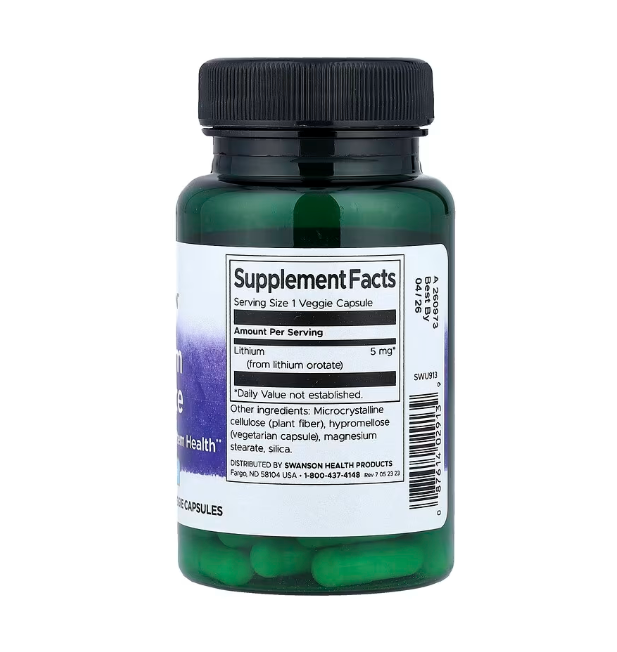 Image 2 of 2
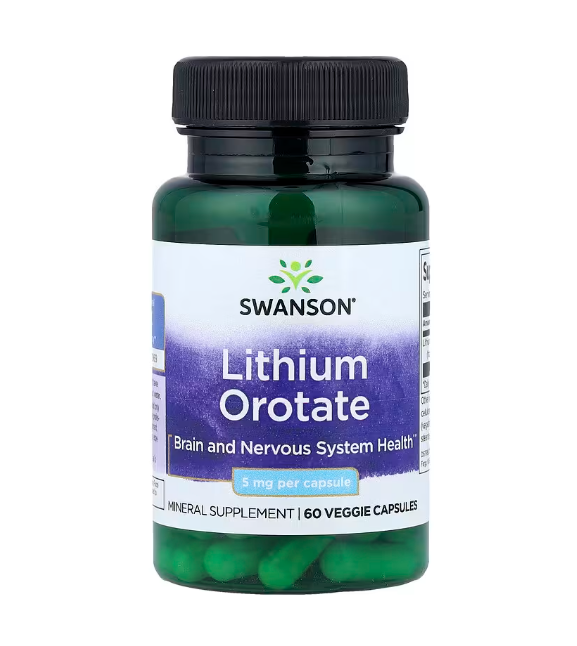
Lithium Orotate
Lithium Orotate – Low-Dose Lithium & Neurocognitive Wellness Research
Lithium Orotate is a supplemental form of lithium, a naturally occurring trace mineral that has been studied for its effects on mood, brain health, cognition, and neurological function. Unlike prescription lithium medicines, lithium orotate is sold in much lower supplemental doses, but direct human research on lithium orotate itself remains limited. Current evidence is strongest for low-dose lithium research more broadly, with early findings in cognition and neuropsychiatric health, while safety requires extra care because lithium can interact with medications and affect kidney, thyroid, and fluid-balance physiology.
Potential Health Benefits of Lithium Orotate
Supports low-dose lithium research in mood and cognitive health
May assist neurocognitive wellness research in studied populations
Provides a low-dose supplemental form of the trace mineral lithium
Further Information
Traditional & Historical Use
Lithium is not a traditional herbal ingredient, but it is a naturally occurring mineral found in trace amounts in soil, water, and some foods. Prescription lithium salts have been used for decades in psychiatry, while lithium orotate has been sold as a lower-dose supplement and has been discussed in scientific reviews as a distinct lithium salt with limited but growing research interest.
Low-Dose Lithium & Neuropsychiatric Research
A systematic review of low-dose lithium studies found limited but promising evidence for neuropsychiatric outcomes, including cognition and affective symptoms, though the overall evidence base remains small and varied. This research relates to low-dose lithium broadly, not exclusively lithium orotate.
Cognitive Health Research
Research into standard and trace-dose lithium has explored dementia, cognitive decline, and behavioural outcomes. A systematic review reported that standard and trace-dose lithium appeared to show biological benefits for dementia and behavioural outcomes, while also noting the need for further randomised controlled research.
Lithium Orotate Research
A review focused on lithium orotate describes its controversial history, experimental research, limited clinical data, and theoretical differences from other lithium salts. Human evidence specific to lithium orotate remains limited, so its supplement use is best understood as an emerging area of low-dose lithium research rather than an established clinical therapy.
Safety & Considerations
Lithium requires careful use, even at supplemental doses. Prescription lithium is associated with potential kidney, thyroid, fluid-balance, and toxicity concerns, particularly with higher doses, long-term use, dehydration, kidney impairment, or interacting medications. Individuals who are pregnant, breastfeeding, taking prescription medications, using antidepressants, antipsychotics, mood stabilisers, diuretics, NSAIDs, ACE inhibitors, blood pressure medications, or managing kidney disease, thyroid conditions, bipolar disorder, depression, cardiovascular conditions, dehydration risk, or any underlying health condition should consult a qualified healthcare professional before use. Lithium Orotate should not be used as a replacement for prescribed medication or mental health care. As with all supplements, use only as directed and seek medical advice before consuming if unsure whether this product is suitable for your individual needs.
References
Lithium orotate: A superior option for lithium therapy?
https://pmc.ncbi.nlm.nih.gov/articles/PMC8413749/Identifying the neuropsychiatric health effects of low-dose lithium: A systematic review
https://pubmed.ncbi.nlm.nih.gov/36436738/Standard and trace-dose lithium: a systematic review of dementia prevention and other behavioural benefits
https://pubmed.ncbi.nlm.nih.gov/24919696/Beyond its Psychiatric Use: The Benefits of Low-dose Lithium Supplementation
https://pubmed.ncbi.nlm.nih.gov/35236261/Long-term, low-dose lithium treatment does not impair renal function in the elderly
https://pubmed.ncbi.nlm.nih.gov/25093483/Lithium Toxicity — StatPearls, NCBI Bookshelf
https://www.ncbi.nlm.nih.gov/books/NBK499992/Lithium and the risk of chronic kidney disease
https://pmc.ncbi.nlm.nih.gov/articles/PMC9541887/
Lithium Orotate – Low-Dose Lithium & Neurocognitive Wellness Research
Lithium Orotate is a supplemental form of lithium, a naturally occurring trace mineral that has been studied for its effects on mood, brain health, cognition, and neurological function. Unlike prescription lithium medicines, lithium orotate is sold in much lower supplemental doses, but direct human research on lithium orotate itself remains limited. Current evidence is strongest for low-dose lithium research more broadly, with early findings in cognition and neuropsychiatric health, while safety requires extra care because lithium can interact with medications and affect kidney, thyroid, and fluid-balance physiology.
Potential Health Benefits of Lithium Orotate
Supports low-dose lithium research in mood and cognitive health
May assist neurocognitive wellness research in studied populations
Provides a low-dose supplemental form of the trace mineral lithium
Further Information
Traditional & Historical Use
Lithium is not a traditional herbal ingredient, but it is a naturally occurring mineral found in trace amounts in soil, water, and some foods. Prescription lithium salts have been used for decades in psychiatry, while lithium orotate has been sold as a lower-dose supplement and has been discussed in scientific reviews as a distinct lithium salt with limited but growing research interest.
Low-Dose Lithium & Neuropsychiatric Research
A systematic review of low-dose lithium studies found limited but promising evidence for neuropsychiatric outcomes, including cognition and affective symptoms, though the overall evidence base remains small and varied. This research relates to low-dose lithium broadly, not exclusively lithium orotate.
Cognitive Health Research
Research into standard and trace-dose lithium has explored dementia, cognitive decline, and behavioural outcomes. A systematic review reported that standard and trace-dose lithium appeared to show biological benefits for dementia and behavioural outcomes, while also noting the need for further randomised controlled research.
Lithium Orotate Research
A review focused on lithium orotate describes its controversial history, experimental research, limited clinical data, and theoretical differences from other lithium salts. Human evidence specific to lithium orotate remains limited, so its supplement use is best understood as an emerging area of low-dose lithium research rather than an established clinical therapy.
Safety & Considerations
Lithium requires careful use, even at supplemental doses. Prescription lithium is associated with potential kidney, thyroid, fluid-balance, and toxicity concerns, particularly with higher doses, long-term use, dehydration, kidney impairment, or interacting medications. Individuals who are pregnant, breastfeeding, taking prescription medications, using antidepressants, antipsychotics, mood stabilisers, diuretics, NSAIDs, ACE inhibitors, blood pressure medications, or managing kidney disease, thyroid conditions, bipolar disorder, depression, cardiovascular conditions, dehydration risk, or any underlying health condition should consult a qualified healthcare professional before use. Lithium Orotate should not be used as a replacement for prescribed medication or mental health care. As with all supplements, use only as directed and seek medical advice before consuming if unsure whether this product is suitable for your individual needs.
References
Lithium orotate: A superior option for lithium therapy?
https://pmc.ncbi.nlm.nih.gov/articles/PMC8413749/Identifying the neuropsychiatric health effects of low-dose lithium: A systematic review
https://pubmed.ncbi.nlm.nih.gov/36436738/Standard and trace-dose lithium: a systematic review of dementia prevention and other behavioural benefits
https://pubmed.ncbi.nlm.nih.gov/24919696/Beyond its Psychiatric Use: The Benefits of Low-dose Lithium Supplementation
https://pubmed.ncbi.nlm.nih.gov/35236261/Long-term, low-dose lithium treatment does not impair renal function in the elderly
https://pubmed.ncbi.nlm.nih.gov/25093483/Lithium Toxicity — StatPearls, NCBI Bookshelf
https://www.ncbi.nlm.nih.gov/books/NBK499992/Lithium and the risk of chronic kidney disease
https://pmc.ncbi.nlm.nih.gov/articles/PMC9541887/