

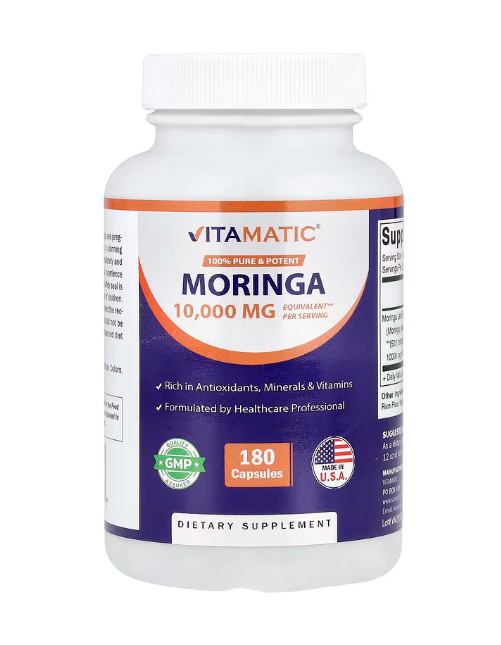
 Image 1 of 2
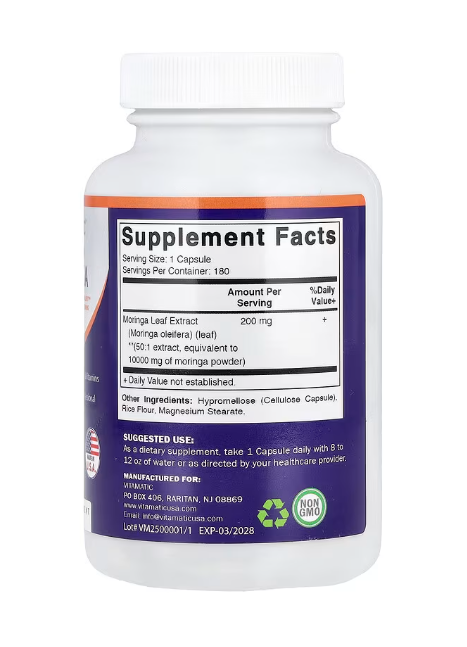 Image 2 of 2
Moringa
Moringa (Moringa oleifera) – Nutrient & Metabolic Wellness Support
Moringa, also known as Moringa oleifera, is a nutrient-rich plant traditionally used as both a food and botanical wellness ingredient across parts of Asia, Africa, and India. The leaves are especially valued for their natural content of protein, minerals, vitamins, polyphenols, flavonoids, and other plant compounds. Human research has mainly investigated moringa for nutritional support, antioxidant activity, blood glucose markers, and pregnancy or breastfeeding nutrition contexts.
Potential Health Benefits of Moringa
Provides plant-based nutritional support
Supports antioxidant and cellular wellness
May assist healthy blood glucose marker support in studied populations
Further Information
Traditional & Historical Use
Moringa has a long history of use as a food plant and traditional botanical ingredient, particularly in regions where the leaves, seed pods, and seeds are consumed as part of the diet. Scientific reviews describe moringa leaves as nutritionally dense, containing protein, minerals, vitamins, and bioactive plant compounds that contribute to its modern use as a wholefood-style wellness supplement.
Nutritional & Antioxidant Support
Moringa leaves have been reviewed for their nutritional and functional properties, including protein, minerals, vitamins, phenolic compounds, flavonoids, and antioxidant activity. These properties support moringa’s use as a nutrient-dense botanical for general wellbeing and cellular wellness.
Blood Glucose & Metabolic Research
Reviews of animal and human studies have investigated moringa’s effects on glycaemia and insulin levels. Human evidence is more limited than animal evidence, but reviews report that several human studies have observed reductions in blood glucose levels in diabetic populations. These findings relate to studied metabolic populations and do not replace medical treatment or prescribed diabetes care.
Pregnancy & Breastfeeding Nutrition Research
Moringa has been studied in pregnancy and breastfeeding contexts, including research on maternal nutrition, anaemia, and lactation outcomes. A 2023 systematic review evaluated moringa supplementation during pregnancy and breastfeeding, and LactMed notes moringa has been studied as a galactagogue, while also highlighting that pregnancy and breastfeeding require professional guidance.
Safety & Considerations
Moringa leaf is commonly consumed as a food-derived botanical, but concentrated supplements may not be suitable for everyone. Individuals who are pregnant, breastfeeding, taking prescription medications, managing blood sugar conditions, blood pressure conditions, liver or kidney disease, or any underlying health condition should consult a qualified healthcare professional before use. As with all supplements, use only as directed and seek medical advice before consuming if unsure whether this product is suitable for your individual needs.
References
Moringa oleifera: An Updated Comprehensive Review of Its Pharmacological Activities, Ethnomedicinal, Phytopharmaceutical Formulation, Clinical, Phytochemical, and Toxicological Aspects
https://pmc.ncbi.nlm.nih.gov/articles/PMC9916933/Bioactive Components in Moringa oleifera Leaves Protect against Chronic Disease
https://pmc.ncbi.nlm.nih.gov/articles/PMC5745501/Effects of Moringa oleifera on Glycaemia and Insulin Levels: A Review of Animal and Human Studies
https://pubmed.ncbi.nlm.nih.gov/31810205/Effects of Moringa oleifera on Glycaemia and Insulin Levels — PMC Full Text
https://pmc.ncbi.nlm.nih.gov/articles/PMC6950081/The effects of Moringa oleifera on blood glucose levels: A scoping review of the literature
https://pubmed.ncbi.nlm.nih.gov/32444043/The Impact of Moringa oleifera Supplementation on Pregnancy and Breastfeeding: A Systematic Review
https://pubmed.ncbi.nlm.nih.gov/37375577/Moringa — Drugs and Lactation Database (LactMed®), NCBI Bookshelf
https://www.ncbi.nlm.nih.gov/books/NBK501899/
Moringa (Moringa oleifera) – Nutrient & Metabolic Wellness Support
Moringa, also known as Moringa oleifera, is a nutrient-rich plant traditionally used as both a food and botanical wellness ingredient across parts of Asia, Africa, and India. The leaves are especially valued for their natural content of protein, minerals, vitamins, polyphenols, flavonoids, and other plant compounds. Human research has mainly investigated moringa for nutritional support, antioxidant activity, blood glucose markers, and pregnancy or breastfeeding nutrition contexts.
Potential Health Benefits of Moringa
Provides plant-based nutritional support
Supports antioxidant and cellular wellness
May assist healthy blood glucose marker support in studied populations
Further Information
Traditional & Historical Use
Moringa has a long history of use as a food plant and traditional botanical ingredient, particularly in regions where the leaves, seed pods, and seeds are consumed as part of the diet. Scientific reviews describe moringa leaves as nutritionally dense, containing protein, minerals, vitamins, and bioactive plant compounds that contribute to its modern use as a wholefood-style wellness supplement.
Nutritional & Antioxidant Support
Moringa leaves have been reviewed for their nutritional and functional properties, including protein, minerals, vitamins, phenolic compounds, flavonoids, and antioxidant activity. These properties support moringa’s use as a nutrient-dense botanical for general wellbeing and cellular wellness.
Blood Glucose & Metabolic Research
Reviews of animal and human studies have investigated moringa’s effects on glycaemia and insulin levels. Human evidence is more limited than animal evidence, but reviews report that several human studies have observed reductions in blood glucose levels in diabetic populations. These findings relate to studied metabolic populations and do not replace medical treatment or prescribed diabetes care.
Pregnancy & Breastfeeding Nutrition Research
Moringa has been studied in pregnancy and breastfeeding contexts, including research on maternal nutrition, anaemia, and lactation outcomes. A 2023 systematic review evaluated moringa supplementation during pregnancy and breastfeeding, and LactMed notes moringa has been studied as a galactagogue, while also highlighting that pregnancy and breastfeeding require professional guidance.
Safety & Considerations
Moringa leaf is commonly consumed as a food-derived botanical, but concentrated supplements may not be suitable for everyone. Individuals who are pregnant, breastfeeding, taking prescription medications, managing blood sugar conditions, blood pressure conditions, liver or kidney disease, or any underlying health condition should consult a qualified healthcare professional before use. As with all supplements, use only as directed and seek medical advice before consuming if unsure whether this product is suitable for your individual needs.
References
Moringa oleifera: An Updated Comprehensive Review of Its Pharmacological Activities, Ethnomedicinal, Phytopharmaceutical Formulation, Clinical, Phytochemical, and Toxicological Aspects
https://pmc.ncbi.nlm.nih.gov/articles/PMC9916933/Bioactive Components in Moringa oleifera Leaves Protect against Chronic Disease
https://pmc.ncbi.nlm.nih.gov/articles/PMC5745501/Effects of Moringa oleifera on Glycaemia and Insulin Levels: A Review of Animal and Human Studies
https://pubmed.ncbi.nlm.nih.gov/31810205/Effects of Moringa oleifera on Glycaemia and Insulin Levels — PMC Full Text
https://pmc.ncbi.nlm.nih.gov/articles/PMC6950081/The effects of Moringa oleifera on blood glucose levels: A scoping review of the literature
https://pubmed.ncbi.nlm.nih.gov/32444043/The Impact of Moringa oleifera Supplementation on Pregnancy and Breastfeeding: A Systematic Review
https://pubmed.ncbi.nlm.nih.gov/37375577/Moringa — Drugs and Lactation Database (LactMed®), NCBI Bookshelf
https://www.ncbi.nlm.nih.gov/books/NBK501899/