

 Image 1 of 2
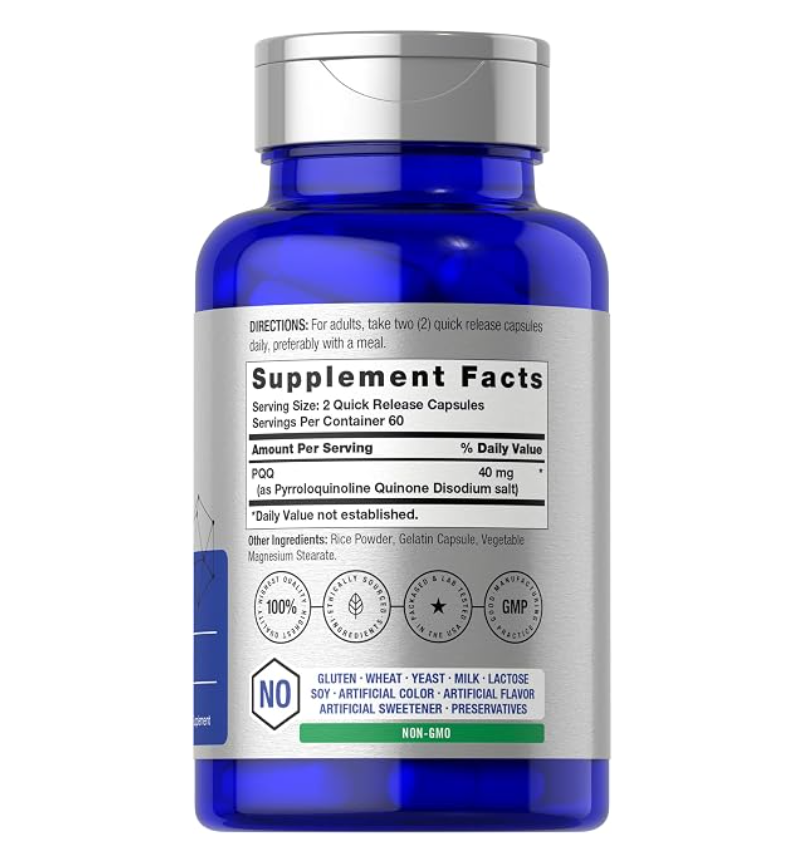 Image 2 of 2
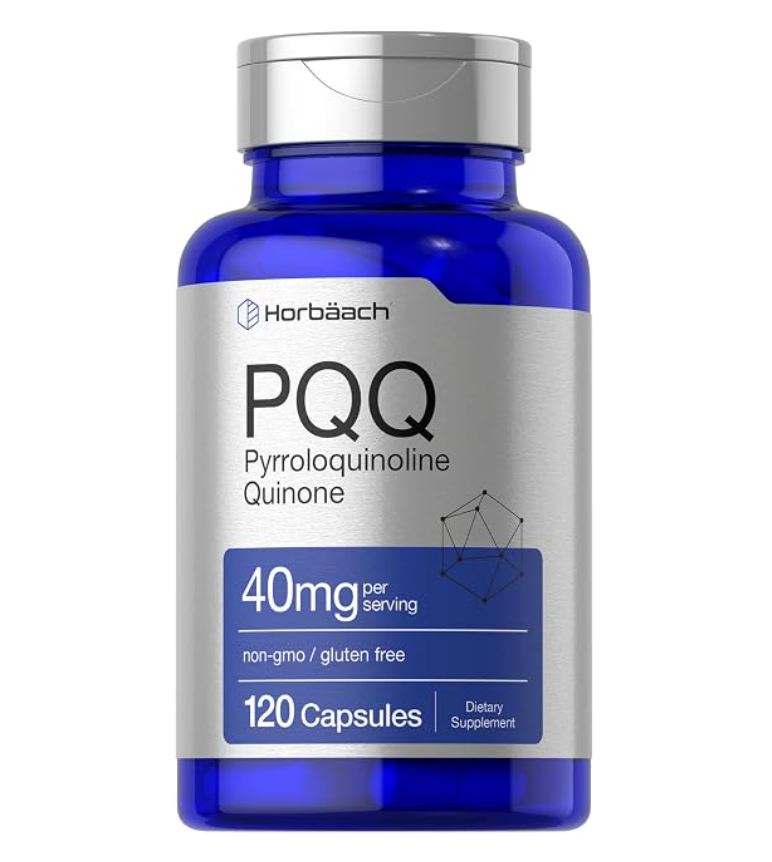
PQQ
PQQ (Pyrroloquinoline Quinone) – Cellular Energy & Cognitive Wellness Support
PQQ, short for pyrroloquinoline quinone, is a naturally occurring compound found in small amounts in certain foods and studied for its role in cellular energy, redox balance, and cognitive performance. It is best known in wellness supplements for its connection to mitochondrial-related metabolism — the processes cells use to produce and manage energy. Human research is still developing, but current studies have investigated PQQ for cognitive function, attention, memory, inflammation markers, and mitochondrial-related metabolic activity.
Potential Health Benefits of PQQ
Supports cognitive performance, memory, and attention in studied adult populations
Assists cellular energy and mitochondrial-related metabolism research
Supports oxidative stress and inflammatory marker research in limited human studies
Further Information
Traditional & Historical Use
PQQ is not a traditional herbal medicine. It is a modern nutrient-like compound first studied for its role in bacterial enzyme systems and later investigated for potential relevance to human nutrition, redox biology, mitochondrial-related metabolism, and cognitive performance. Its supplement use is based on modern biochemical and human clinical research rather than traditional medicinal practice.
Cognitive Function Research
Human clinical studies have investigated PQQ disodium salt for cognitive function in healthy adults. A placebo-controlled study in adults aged 20–65 found that 20 mg/day PQQ for 12 weeks improved selected cognitive measures, with age-related differences in response. Another study in healthy Japanese adults reported improvements in memory, attention, judgement, and cognitive function following PQQ supplementation. These findings support cognitive wellness wording, while still recognising that the number of human studies remains limited.
Cellular Energy & Mitochondrial-Related Metabolism
A small human crossover study found that dietary PQQ altered indicators related to mitochondrial metabolism in human subjects. This supports wording around cellular energy and mitochondrial-related metabolism research, while avoiding overstatement that PQQ directly increases energy levels for all users.
Oxidative Stress & Inflammatory Marker Research
PQQ has redox-related biological activity, and human research has reported changes in selected inflammation-related markers, including C-reactive protein and IL-6, after PQQ supplementation. Most broader antioxidant and oxidative stress evidence is still supported by mechanistic, animal, or cell-based research, so the strongest customer-facing claim is support for oxidative balance and inflammatory marker research rather than disease prevention.
Safety & Considerations
PQQ disodium salt has been evaluated as a novel food ingredient, with EFSA concluding that BioPQQ™ is safe under intended conditions of use for healthy adults at up to 20 mg/day, excluding pregnant and lactating women. Human safety data is still more limited than for long-established nutrients, so individuals who are pregnant, breastfeeding, taking prescription medications, or managing neurological, metabolic, liver, kidney, cardiovascular, or other medical conditions should consult a qualified healthcare professional before use. As with all supplements, use only as directed and seek medical advice before consuming if unsure whether this product is suitable for your individual needs.
References
Pyrroloquinoline quinone disodium salt improves brain function in both younger and older adults
https://pubmed.ncbi.nlm.nih.gov/36807425/Effect of Dietary Pyrroloquinoline Quinone Disodium Salt Intake on the Serum Cholesterol Levels and Cognitive Function of Healthy Japanese Adults
https://pubmed.ncbi.nlm.nih.gov/34415830/Dietary pyrroloquinoline quinone (PQQ) alters indicators of inflammation and mitochondrial-related metabolism in human subjects
https://pubmed.ncbi.nlm.nih.gov/24231099/Pyrroloquinoline-Quinone Is More Than an Antioxidant
https://pmc.ncbi.nlm.nih.gov/articles/PMC8533503/Safety of Pyrroloquinoline Quinone Disodium Salt as a Novel Food
https://pubmed.ncbi.nlm.nih.gov/32625350/Safety of pyrroloquinoline quinone disodium salt as a novel food — PMC full text
https://pmc.ncbi.nlm.nih.gov/articles/PMC7010138/
PQQ (Pyrroloquinoline Quinone) – Cellular Energy & Cognitive Wellness Support
PQQ, short for pyrroloquinoline quinone, is a naturally occurring compound found in small amounts in certain foods and studied for its role in cellular energy, redox balance, and cognitive performance. It is best known in wellness supplements for its connection to mitochondrial-related metabolism — the processes cells use to produce and manage energy. Human research is still developing, but current studies have investigated PQQ for cognitive function, attention, memory, inflammation markers, and mitochondrial-related metabolic activity.
Potential Health Benefits of PQQ
Supports cognitive performance, memory, and attention in studied adult populations
Assists cellular energy and mitochondrial-related metabolism research
Supports oxidative stress and inflammatory marker research in limited human studies
Further Information
Traditional & Historical Use
PQQ is not a traditional herbal medicine. It is a modern nutrient-like compound first studied for its role in bacterial enzyme systems and later investigated for potential relevance to human nutrition, redox biology, mitochondrial-related metabolism, and cognitive performance. Its supplement use is based on modern biochemical and human clinical research rather than traditional medicinal practice.
Cognitive Function Research
Human clinical studies have investigated PQQ disodium salt for cognitive function in healthy adults. A placebo-controlled study in adults aged 20–65 found that 20 mg/day PQQ for 12 weeks improved selected cognitive measures, with age-related differences in response. Another study in healthy Japanese adults reported improvements in memory, attention, judgement, and cognitive function following PQQ supplementation. These findings support cognitive wellness wording, while still recognising that the number of human studies remains limited.
Cellular Energy & Mitochondrial-Related Metabolism
A small human crossover study found that dietary PQQ altered indicators related to mitochondrial metabolism in human subjects. This supports wording around cellular energy and mitochondrial-related metabolism research, while avoiding overstatement that PQQ directly increases energy levels for all users.
Oxidative Stress & Inflammatory Marker Research
PQQ has redox-related biological activity, and human research has reported changes in selected inflammation-related markers, including C-reactive protein and IL-6, after PQQ supplementation. Most broader antioxidant and oxidative stress evidence is still supported by mechanistic, animal, or cell-based research, so the strongest customer-facing claim is support for oxidative balance and inflammatory marker research rather than disease prevention.
Safety & Considerations
PQQ disodium salt has been evaluated as a novel food ingredient, with EFSA concluding that BioPQQ™ is safe under intended conditions of use for healthy adults at up to 20 mg/day, excluding pregnant and lactating women. Human safety data is still more limited than for long-established nutrients, so individuals who are pregnant, breastfeeding, taking prescription medications, or managing neurological, metabolic, liver, kidney, cardiovascular, or other medical conditions should consult a qualified healthcare professional before use. As with all supplements, use only as directed and seek medical advice before consuming if unsure whether this product is suitable for your individual needs.
References
Pyrroloquinoline quinone disodium salt improves brain function in both younger and older adults
https://pubmed.ncbi.nlm.nih.gov/36807425/Effect of Dietary Pyrroloquinoline Quinone Disodium Salt Intake on the Serum Cholesterol Levels and Cognitive Function of Healthy Japanese Adults
https://pubmed.ncbi.nlm.nih.gov/34415830/Dietary pyrroloquinoline quinone (PQQ) alters indicators of inflammation and mitochondrial-related metabolism in human subjects
https://pubmed.ncbi.nlm.nih.gov/24231099/Pyrroloquinoline-Quinone Is More Than an Antioxidant
https://pmc.ncbi.nlm.nih.gov/articles/PMC8533503/Safety of Pyrroloquinoline Quinone Disodium Salt as a Novel Food
https://pubmed.ncbi.nlm.nih.gov/32625350/Safety of pyrroloquinoline quinone disodium salt as a novel food — PMC full text
https://pmc.ncbi.nlm.nih.gov/articles/PMC7010138/